

Remington Expands Subsonic Rifle Line With Three Loads
Published: August 27, 2026 at 8:06 AM MST
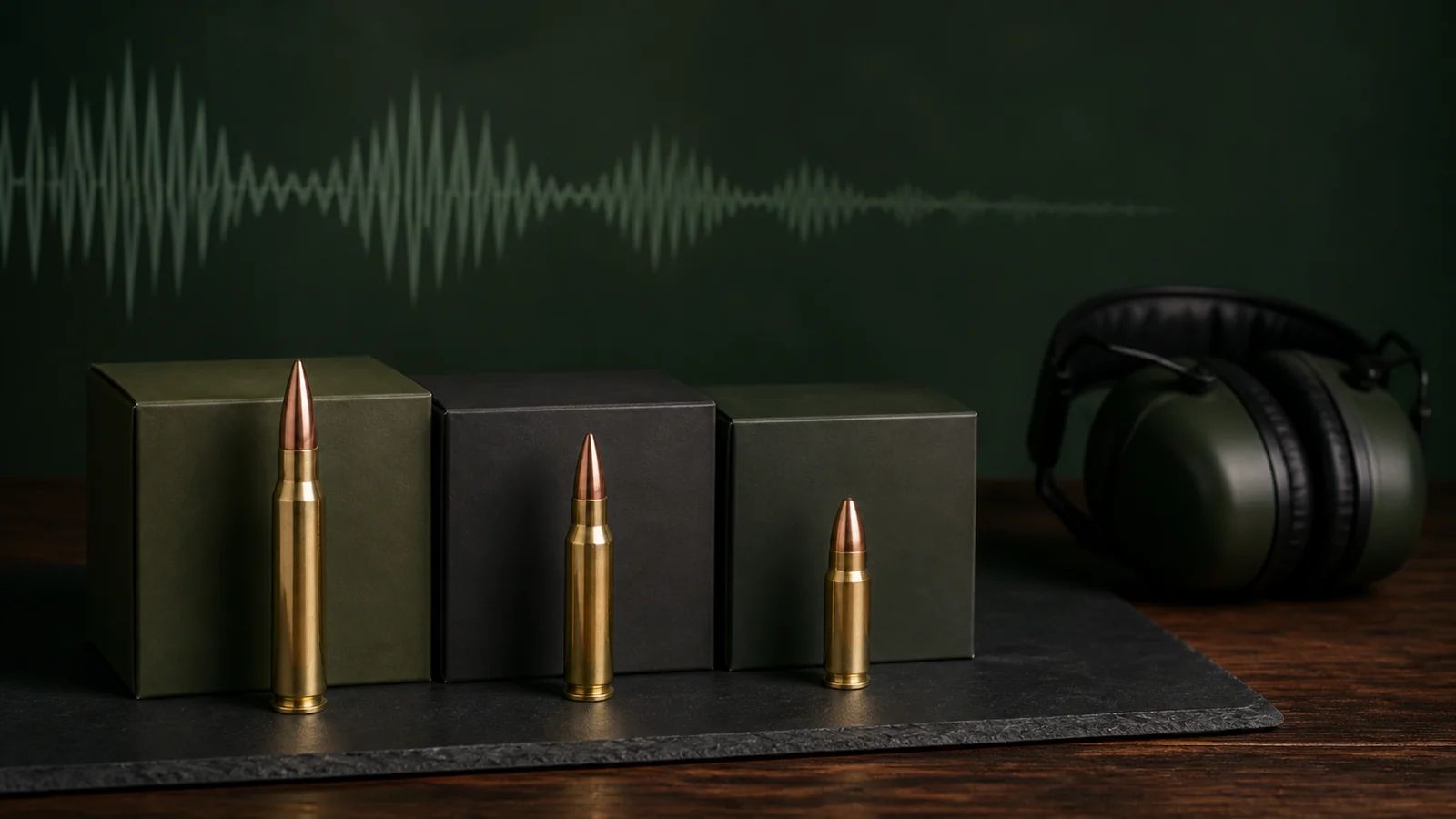
Editorial illustration created for Gun Place. Not documentary photography.
Updated August 27, 2026: Remington Ammunition has expanded its Subsonic Rifle family with three heavy-bullet loads for .360 Buckhammer, .308 Winchester and .45-70 Government. The company says all three are now shipping to dealers nationwide.
The new Remington Subsonic Rifle ammunition gives hunters and range users factory-loaded subsonic options in three cartridges more commonly associated with conventional hunting velocities. Remington announced the additions on August 25 from Lonoke, Arkansas, according to its company release distributed through The Hunting Wire.
The specifications are manufacturer claims, not independent Gun Place test results. Subsonic ammunition also does not make a firearm silent, eliminate the need for hearing protection or guarantee reliable operation in every rifle. Firearm owners should verify the exact chambering, product number and manufacturer guidance before use.
Three new Remington Subsonic Rifle ammunition loads
Remington lists the new loads in 20-round boxes with the following published specifications:
- .360 Buckhammer: 250-grain bonded hollow point, catalog number 27745, advertised muzzle velocity of 1,030 feet per second and suggested retail price of $47.99.
- .308 Winchester: 205-grain hollow point, catalog number 27746, advertised muzzle velocity of 1,050 feet per second and suggested retail price of $49.99.
- .45-70 Government: 300-grain bonded hollow point, catalog number 27747, advertised muzzle velocity of 1,000 feet per second and suggested retail price of $59.99.
Those figures describe the company’s listed loads; actual velocity can vary with barrel length, temperature, firearm dimensions and other conditions. The speed of sound also changes with atmospheric conditions, so “subsonic” is a design target rather than a promise that every shot in every environment will produce an identical reading.
The .300 AAC Blackout remains in Remington’s Subsonic Rifle family. The company’s earlier catalog listed that load with a 220-grain open-tip flat-base bullet. Adding three cartridges significantly broadens the line beyond a round designed from the outset to work well at reduced velocity.
What the enclosed-base bullet claim means
Remington says the new bullets use an enclosed base intended to reduce exposed-lead buildup in suppressor ports. In an enclosed-base construction, jacket material covers the rear of the bullet instead of leaving the lead core exposed directly to hot propellant gases.
The company also says it selected powders and primers to maintain consistent velocities below the speed of sound. Gun Place has not independently measured velocity spread, accuracy, terminal performance or suppressor fouling for these products. Buyers should read the claims as specifications supplied by Remington until independent testing becomes available.
This distinction is especially relevant because the three cartridges serve different roles. .308 Winchester is widely used in bolt-action and semiautomatic rifles. .45-70 Government is common in lever-action and single-shot platforms. .360 Buckhammer is a rimmed straight-wall cartridge developed for hunting, including jurisdictions that permit straight-wall rifle cartridges during designated seasons. A load that performs in one firearm type should not be assumed to function identically in another.
Subsonic does not mean silent
A projectile traveling below the local speed of sound avoids the ballistic shock wave commonly called the supersonic crack. That is only one component of a gunshot. Muzzle blast, the firearm’s action and impacts downrange can still produce substantial sound.
A suppressor is designed to reduce muzzle-blast energy; it does not erase every sound source. Research archived by the National Institute for Occupational Safety and Health found that suppressors and low-velocity ammunition can reduce firearm noise exposure, while concluding that users should still wear hearing protection whenever firing weapons. The CDC’s current hearing-loss guidance likewise recommends adequate protection when loud noise cannot be avoided.
Remington describes the loads as producing quieter operation and reduced recoil. Those outcomes depend on the firearm, suppressor, surroundings and comparison load. “Quieter” should not be confused with hearing-safe, and reduced recoil should not be treated as a guarantee for every configuration.
Compatibility questions buyers should check
Heavy subsonic bullets can create firearm-specific considerations. A shooter should confirm that the ammunition exactly matches the chamber marking and that the firearm manufacturer approves the load type. Barrel twist and condition can affect bullet stability, while gas-operated rifles may not cycle every reduced-velocity load reliably.
Remington’s announcement does not establish universal suppressor compatibility. Users must follow the firearm and suppressor manufacturers’ caliber, barrel-length, mounting and ammunition restrictions. An unstable projectile or incompatible combination can damage equipment and create a safety hazard.
The same specification-first approach applies when ammunition makers introduce other specialized loads. Gun Place recently examined compatibility labeling in its report on Federal’s 6.5 Creedmoor +Peak ammunition and covered the very different design goals behind Winchester’s Super Match competition line.
Suppressors remain federally regulated
Subsonic ammunition itself is conventional ammunition, but the suppressors Remington references are regulated under the National Firearms Act. The ATF’s NFA guidance states that silencers are covered firearms and that manufacture or transfer requires the applicable prior approval and tax process. State and local law can impose additional restrictions.
Gun Place’s report on ATF’s July 2026 eForm 4 processing averages explains recent agency timing data. Faster processing does not change eligibility, approval, possession or local-law requirements.
Why the expansion matters
Factory subsonic ammunition has historically centered on cartridges such as .300 Blackout and pistol calibers that naturally accommodate heavy bullets at lower velocities. Remington’s move brings that product concept to two traditional big-bore hunting cartridges and the newer .360 Buckhammer.
The .308 load may attract the broadest range of users because of the number of rifles chambered for it, but platform compatibility will be particularly important. The .360 Buckhammer and .45-70 loads may appeal to hunters seeking reduced report and recoil at the short distances where those cartridges are often used. Hunting legality, permitted equipment and minimum-energy rules vary by jurisdiction and season.
The practical news is that buyers now have three additional factory-loaded options rather than needing to look only to smaller specialty brands. Availability and street prices may take time to stabilize as shipments reach dealers.
Bottom line
Remington’s Subsonic Rifle expansion adds .360 Buckhammer, .308 Winchester and .45-70 Government loads with published velocities from 1,000 to 1,050 fps. The enclosed-base design and heavy bullets are intended for consistent reduced-velocity use, particularly with compatible suppressors.
The published specifications are a starting point, not a substitute for firearm-specific compatibility checks, legal compliance or hearing protection. Gun Place will update this coverage if Remington releases additional technical data or a product notice affecting the new loads.
This article is for general information and is not legal advice. Firearm, ammunition, suppressor and hunting laws vary by jurisdiction and can change.
Sources
- Remington Ammunition release: “Remington’s New Subsonic Rifle Loads Now Shipping”
- Remington Ammunition product catalog: Subsonic Rifle
- Bureau of Alcohol, Tobacco, Firearms and Explosives: National Firearms Act
- NIOSH: firearm suppressors, low-velocity ammunition and auditory risk
Gun Place newsroom policies: Editorial Policy · Corrections · Ownership & Funding · Editorial contact.
