

Louisville Operation Seizes 42 Machinegun Conversion Devices
Published: September 15, 2026 at 9:15 AM MST
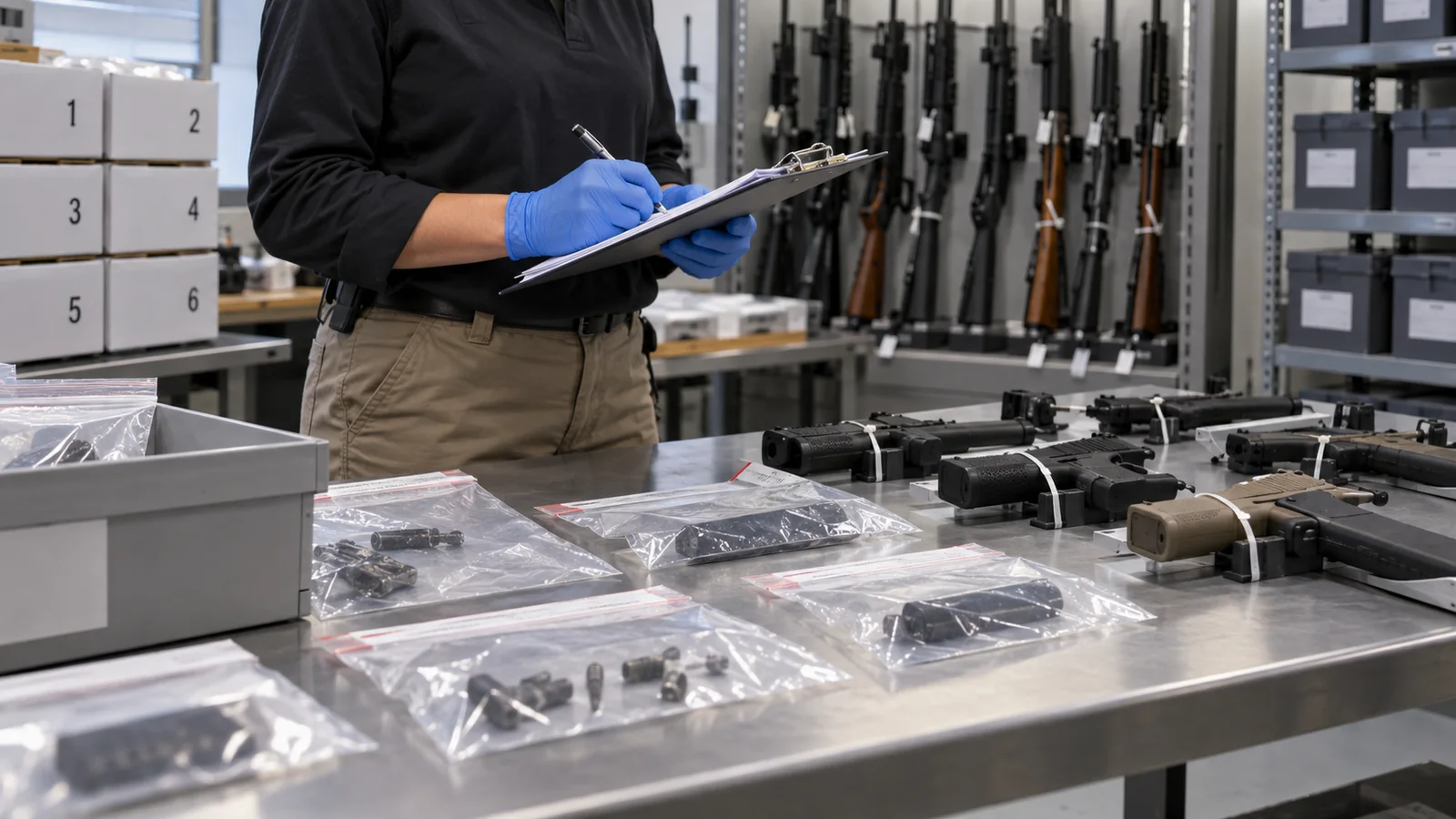
Editorial illustration created for Gun Place. Not documentary photography.
LOUISVILLE, KENTUCKY — September 15, 2026. Federal prosecutors say a roughly two-month enforcement initiative in Louisville produced 53 federal and state indictments and the seizure of 160 firearms, including 42 machinegun conversion devices.
The Western District of Kentucky announced the results on September 14, describing the initiative as an ATF-led effort focused on alleged gun and drug trafficking and violent crime. Nearly 50 defendants were arrested, according to the Justice Department.
The totals are consequential, but they require careful reading. An indictment is an accusation, not a conviction, and the government’s announcement combines the results of numerous investigations and cases. The seizure count does not by itself establish how every item was acquired, possessed or used.
What the Louisville operation reported
The Justice Department’s September 14 announcement reports 43 federal indictments and 10 state indictments. Prosecutors said the defendants collectively have well over 200 prior felony convictions and that many are alleged to have gang affiliations.
Authorities reported seizing 160 firearms, 42 machinegun conversion devices and approximately 10 kilograms of illegal drugs, principally fentanyl and methamphetamine. The announcement credits the Bureau of Alcohol, Tobacco, Firearms and Explosives, Louisville Metro Police Department, Kentucky State Police, FBI, DEA, U.S. Marshals Service and several local agencies.
Those are aggregate operational results. The release does not say that each defendant is charged with possessing a conversion device, nor does it assign all 42 devices to a single case. Specific criminal responsibility will depend on the allegations, evidence and proceedings in each prosecution.
Why machinegun conversion devices receive separate treatment
Federal law does not treat a conversion device as an ordinary firearm accessory. The statutory definition of a machinegun includes certain parts designed and intended solely and exclusively—or combinations of parts designed and intended—for converting a weapon into a machinegun.
ATF therefore describes machinegun conversion devices as machineguns under federal law even when they are not installed on a firearm. That classification is important because a person does not need to fire a converted weapon before possession of the device can raise serious federal issues.
The classification does not mean every small component found near a firearm is automatically a machinegun. Design, intent, configuration and the facts surrounding the item matter. Owners and retailers should avoid making their own conclusions from appearance alone when an unfamiliar component is involved.
ATF’s August 6 enforcement announcement says unlawful possession, manufacture or distribution of a conversion device can carry up to 10 years in federal prison and a fine. That is a statement of potential statutory exposure, not a prediction about any individual Louisville defendant.
The 2026 bump-stock rule change does not cover conversion devices
Recent changes to ATF’s machinegun-definition regulation can create confusion. In May 2026, ATF issued a final rule removing regulatory sentences that had classified bump stocks as machineguns. The agency acted in response to the U.S. Supreme Court’s 2024 decision in Garland v. Cargill.
That 2026 rulemaking concerns bump stocks. It did not legalize devices designed or intended to convert a semiautomatic firearm so it fires automatically. Conversion devices fall under a separate portion of the statutory machinegun definition.
That distinction matters for anyone who has encountered headlines saying ATF “changed the machinegun rule.” The removal of bump-stock language should not be read as a general relaxation of federal restrictions on conversion devices.
What the seizure numbers do—and do not—prove
A seizure establishes that law-enforcement officers took custody of an item during an investigation. It does not by itself prove the charged offense, the identity of the responsible person or whether the item functioned as alleged. Those questions are tested through court proceedings.
The conversion-device total nevertheless stands out. Forty-two devices represent more than one-quarter of the 160 firearms and devices reported in the announcement when counted as separate seized items. Because federal law classifies qualifying conversion devices themselves as machineguns, raw “firearm” totals can obscure the different legal categories present in an operation.
The Louisville initiative also demonstrates how gun and drug investigations frequently overlap. Prosecutors paired the firearms figures with kilograms of seized fentanyl and methamphetamine and said the operation concentrated on people alleged to drive violent crime. Similar investigative connections appear in Gun Place’s coverage of a Cincinnati NIBIN-linked prosecution and the District of Columbia task force’s firearm recoveries.
Practical implications for retailers and owners
For licensed retailers, the practical lesson is straightforward: conversion devices should not be handled as ordinary accessories. Product names, online listings and informal descriptions are not substitutes for the item’s actual design and federal classification. An unfamiliar part that is represented as increasing automatic-fire capability warrants immediate caution and qualified legal or ATF guidance.
Consumers should likewise avoid possessing or accepting an unidentified device based on a seller’s assurance that it is merely a component. Internet marketplace language can be incomplete or misleading, and an uninstalled device may still fall within the federal definition.
None of this changes the presumption of innocence in the Louisville cases. It explains why the government highlighted the 42 devices separately and why the legal classification is relevant before any trial or plea resolves the allegations.
Gun Place follows these issues as part of its Safety & Compliance coverage. Retailers and owners should consult current official guidance and qualified counsel for fact-specific questions.
What happens next
The federal and state cases will proceed separately, and outcomes may include dismissals, pleas, trials or other resolutions. Charging documents and later court records—not the initial operation summary—will provide the most reliable account of the allegations against each defendant.
For now, the confirmed public record is narrower: authorities announced 53 indictments, nearly 50 arrests, 160 seized firearms, 42 seized conversion devices and approximately 10 kilograms of illegal drugs. The defendants are presumed innocent unless and until proven guilty.
This article provides general information and is not legal advice. Firearm classifications and criminal exposure depend on current law and specific facts. Gun Place reports allegations under its published editorial standards.
Sources
- U.S. Attorney’s Office, Western District of Kentucky: Louisville operation announcement, September 14, 2026
- ATF: Machinegun conversion device seizure and federal classification, August 6, 2026
- ATF: 2026 final rule revising the machinegun definition after Garland v. Cargill
Gun Place newsroom policies: Editorial Policy · Corrections · Ownership & Funding · Editorial contact.
