

M17/M18 Safety Review Backs Military Pistol System
Published: August 20, 2026 at 11:47 AM MST
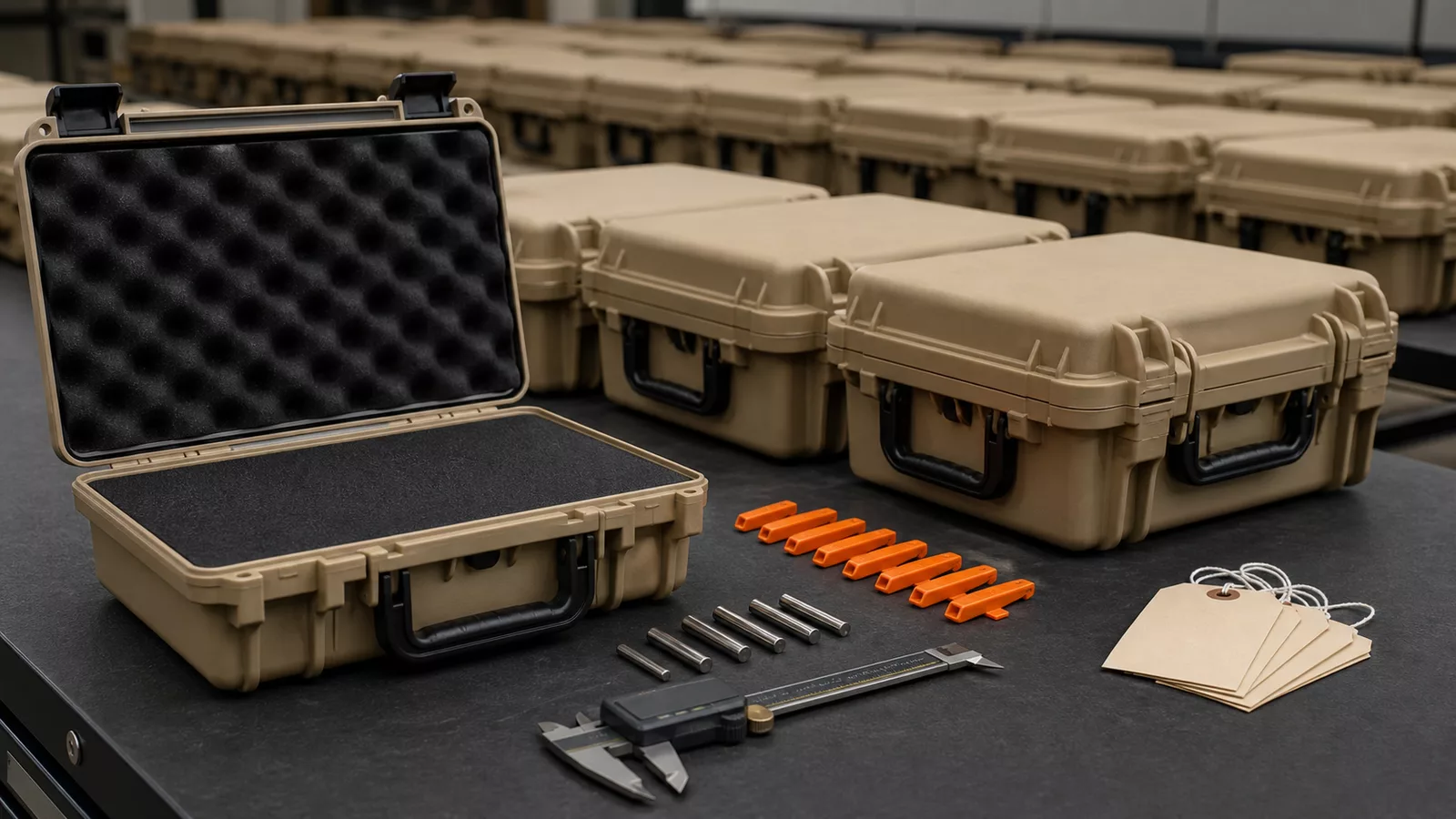
Editorial illustration created for Gun Place. Not documentary photography.
Updated August 20, 2026: A U.S. military program office says an inspection of nearly 114,000 in-use M18 pistols found no condition that could have caused an uncommanded discharge. SIG Sauer highlighted the assessment Thursday as renewed support for the safety and reliability of the military M17 and M18 Modular Handgun System.
The M17/M18 safety review is significant because it describes one of the largest publicly reported inspections of the military pistol fleet. It also requires a careful distinction: the finding applies to the military-specific M17 and M18 configuration and the incidents investigated by the government. It is not a court ruling about every commercial P320, and it does not resolve every pending civilian product-liability claim.
The government report, published August 7 by Project Manager Soldier Lethality, says more than 400,000 M17 and M18 pistols are in service across the Army, Air Force, Marine Corps and Navy. The office said all alleged uncommanded-discharge incidents it investigated involved the trigger being pulled rather than a mechanically caused discharge.
What the M17/M18 safety review found
The official military assessment describes a 100% inspection of the Department of the Air Force’s in-use M18 inventory. Nearly 114,000 pistols had been inspected when the report was published, and the program office said none displayed a condition that could cause an uncommanded discharge.
The review followed a 2025 Air Force Global Strike Command pause involving the M18 after an Airman’s death. The command subsequently returned the pistol to service after its inspection found no discharge attributable to a weapon malfunction. The new program-office report provides a broader account of testing, production controls and incident review across the military system.
According to the report, firearms mishaps recorded in the Army Safety Management Information System represent less than 0.006% of the MHS pistols issued. That figure is useful context, but it should not be read as a standalone mechanical-failure rate: “firearms mishaps” can include different circumstances, and the report does not publish a case-by-case dataset.
How the military says incidents are investigated
Project Manager Soldier Lethality says a pistol associated with a reported uncommanded discharge is preserved in its reported configuration and placed under government property control. Investigators then inspect the weapon, test its internal and external safeties, conduct a functional range test, examine striker operation and disassemble the pistol for a component inspection.
The office says investigators have not induced a discharge without disengaging the manual safety and pulling the trigger. It also reports that each production lot undergoes government-supervised Lot Acceptance Testing and that every lot fielded to date passed that process.
Before fielding, more than 200 MHS pistols reportedly fired over 1.5 million rounds during Production Verification Testing. The evaluation included reliability, durability, accuracy, rough handling, drop safety and extreme environmental conditions. The report acknowledges that engineering changes were made to address early drop-test concerns and says those changes were applied before any MHS pistol was fielded.
Military M17 and M18 pistols are not identical to every P320
The M17 and compact M18 are based on SIG Sauer’s P320 architecture, but the military configuration includes features that matter to this safety discussion. The program office lists four internal safety mechanisms plus an external ambidextrous manual safety. It also says the fielded system incorporates the engineering changes made during military testing.
That distinction has been emphasized previously by the Army. In 2025, the service told The War Zone that the M17/M18 is related to, but not exactly the same as, the commercial P320 and includes enhancements not present on every civilian model.
Accordingly, the military’s conclusion should not be expanded beyond the system it evaluated. Commercial P320 pistols exist in multiple configurations, and civilian cases often turn on the specific pistol, holster, safety features, warnings and circumstances involved. Owners should follow the manual and current guidance for their exact model rather than assuming a military fleet assessment answers every product-specific question.
How the finding fits with current P320 litigation
The military report arrives amid continuing legal disputes over alleged P320 discharges. In a recent Maine case, a federal jury found for SIG Sauer after a detective alleged his holstered P320 was defective. Maine Public reported that the plaintiff’s lawyers were reviewing appeal options.
That verdict, like the military assessment, is specific to the evidence and product configuration before the decision-maker. Other P320 cases have produced different procedural outcomes and verdicts. A neutral reading is therefore narrower than either side’s broadest claim: the military says its M17/M18 fleet is safe and reliable, while separate commercial-product litigation continues on its own records.
SIG Sauer’s August 20 company announcement points to the military assessment as confirmation of the system’s safety. Because that announcement comes from the manufacturer, the underlying government report remains the most important primary source for evaluating the claims.
What owners and institutional users should take away
For military users, the report says the inspected M17/M18 fleet remains approved for service and that production and incident-review controls continue. For civilian owners and agencies, it reinforces the importance of configuration-specific information, compatible holsters, regular inspection and adherence to manufacturer and departmental procedures.
The subject also illustrates why firearm-safety reporting should separate confirmed findings from allegations and avoid treating one verdict or inspection as universal. Gun Place’s Safety & Compliance coverage follows recalls, official testing and verified safety developments. Our recent report on the BBRKIN biometric safe recall is another example of relying on product-specific government findings rather than generalizing across an entire category.
The bottom line
The military’s M17/M18 safety review is a substantial vote of confidence in the fielded Modular Handgun System. Nearly 114,000 Air Force pistols were inspected without finding a condition capable of causing an uncommanded discharge, and the Army program office says its investigated incidents involved trigger activation rather than a mechanical firing-system failure.
The result is important, but bounded: it addresses military M17 and M18 pistols, not every commercial P320 configuration or every pending claim. Gun Place will update this report if the military releases additional incident data, inspection criteria or findings.
This article provides general safety and industry information. Always follow the current manual, manufacturer guidance and applicable agency procedures for the exact firearm and equipment in use.
Sources
- U.S. Army: Modular Handgun System safety and reliability assessment
- SIG Sauer: August 20 company announcement
- SIG Sauer: 2025 Air Force Global Strike Command M18 reinstatement statement
- The War Zone: Army explanation of M17/M18 configuration differences
- Maine Public: August 2026 P320 jury verdict
Gun Place newsroom policies: Editorial Policy · Corrections · Ownership & Funding · Editorial contact.
